Research points to new methods for poultry wastewater treatment
Published by Water Network Research, Official research team of The Water Network in Case Studies
The U.S. Poultry & Egg Assn. and the USPOULTRY Foundation announced the completion of a funded research project at the University of Kansas in Lawrence, Kan., that found new methods for poultry wastewater treatment.
In a recently completed research project, Dr. Gibum Kwon at the University of Kansas Center for Research found that innovative new technologies could be applied to the treatment of poultry processing plant wastewater, USPOULTRY said.
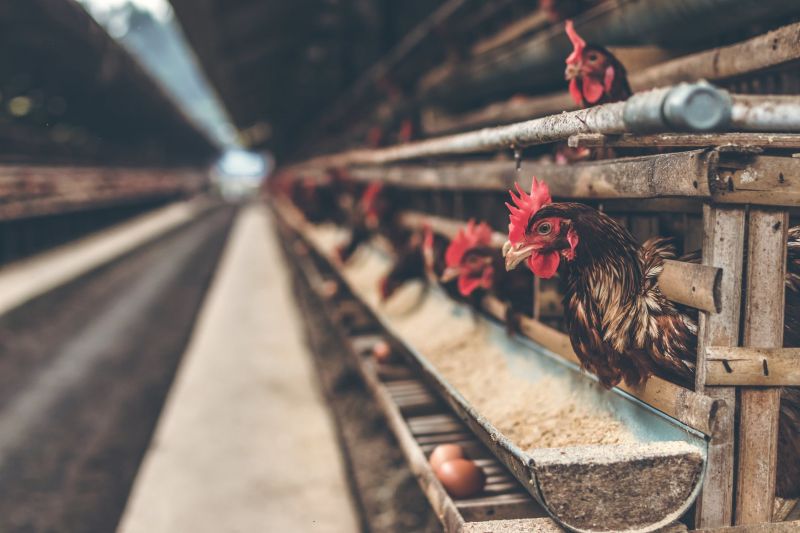
Representative image by Pexels , labeled for reuse
Research summary:
Poultry processing facilities use a large volume of fresh water and produce a large volume of wastewater daily. Current poultry wastewater remediation technologies include a series of consecutive steps including sedimentation, biological oxidation of organic pollutes using microorganisms, and filtration. These processes may require using chemical agents and biological species that must be removed before discharge or may require a long treatment time resulting in the increase of operating cost. The primary goal of this project was to devise an economically viable, highly energy-efficient continuous single unit operation for the remediation of poultry wastewater by uniquely combining smart membrane-based separation, liquid-liquid extraction and recovery of value-added products.
During the period of this project specific objectives were addressed and significant progress made toward the development of the new system. Membranes were developed possessing selective wettability, both hydrophilic (water loving) and oleophobic (oil hating), and photocatalytic ability by coating commercially available filters with photocatalytic titania (TiO2) nanoparticles. Parameters for successfully coating these membranes were studied and optimized. A novel continuous separation apparatus was engineered that consists of a mixer, an extractant, and two membranes operating in parallel. This allows continuous separation of oil-water mixtures by combining membrane-based and liquid-liquid extraction. Experiments were successfully conducted to establish the proof-of-concept that value-added products could be recovered after separation utilizing a commercial hydrophobic adsorbent.
The new apparatus has been tested using real wastewater from a poultry processing plant and performed well under laboratory conditions. Several aspects must be improved before it can be commercially successful, such as filter cleaning, filter durability and by-product recovery capacity. This research is very important to the future of the poultry industry because innovative new technologies are needed to improve the treatment of poultry wastewater. Such technologies can help the industry enhance its programs to reuse, conserve and recycle water.
Source: USPOULTRY
Tags
Category: Case Studies
- Industrial Wastewater Treatment
- Industrial Water Treatment
- Industrial Water Treatment
- Poultry Farming
- Poultry Feed
- Poultry Processing