Published
by Leonardo Zanata, Professor at Faculdades Oswaldo Cruz
Hello everyone!
Here in Brazil, São Paulo State and near regions some wells (mostly tube wells) which are 80 to 400 m deep has high concentration of Fluoride (F-), between 3 to 15 mg/l of F-, specially in the drought periods, when the water replacement in the aquifers is low.
So, what can be the solution? Reverse Osmosis? Electrode-ionization? Ion Exchange?
The solution that we use is use of low electric current electrolysis for capturing the fluoride in the electrode.We found this is a quick and cheap process for treating the fluoride water.
But I would like to hear from water treatment fellows, if they have other solutions which are quicker and economical.
This is fascinating. In Australia a lot of our local Authorities add flouride to our drinking water, in the belief that it prevents tooth decay.
In fact it was mandatary for a while. But a change of Government has now made it optional. But our local Water Supply authority is still adding it.
So it is up to the home owner to remove it if they wish. So far the only practical solution for this is RO, with the resultant huge waste of water. which seems to be counter productive, given the fact that water saving devices are mandatory, and water restrictions are usually in force.
Consider looking at capacitive deionization technologies. They are much lower energy than RO , work well for mono or divalent ion removal in TDS less than 15000 ppm.
What is fluoride - Fluoride compounds are salts that form when the element, fluorine, combines with minerals in soil or rocks. Fluorine is a common element that does not occur in the elemental state in nature because of its high reactivity. It accounts for about 0.3 g/kg of the Earth’s crust and exists in the form of fluorides in a number of minerals.
Fluoride in water - Fluoride is found in all natural waters at some concentration. Seawater typically contains about 0.86 –1.4 mg/l while freshwater concentrations are in the range of 0.01 – 0.3 mg/l. In groundwater, however, low or high concentrations of fluoride can occur, depending on the nature of the rocks and the occurrence of fluoride-bearing minerals.
Guidelines and standards for Fluoride level in drinking water - Taking health effects into consideration, the World Health Organization (1996) has set a guideline value of 1.5 mg/1 as the maximum permissible level of fluoride in drinking waters. However, it is important to consider climatic conditions, volume of water intake, diet and other factors in setting national standards for fluoride. As the fluoride intake determines health effects, standards are bound to be different for countries with temperate climates and for tropical countries, where significantly more water is consumed. In an interview of Dr. Annette Johnson, described natural occurrence of fluoride, its adverse effects and the areas affected by fluoride.
Removal of Fluoride from drinking water - The common methods used for the removal of fluoride from drinking water are divided in the following categories:
Precipitation
Adsorption and ion-exchange
Membrane filtration
1. Precipitation
Adding chemicals to remove fluoride as precipitates is called as the precipitation method. Among these are precipitations with calcium and aluminum salts.
A. Sources of calcium (Lime Vs Calcium Fluoride): Lime is a rich source of calcium however when compared to calcium chloride (CaCl2) it has lesser solubility (0.185 g/100 ml Vs 74.5 g/100ml). Consequently when lime is added as a removal agent the amount of calcium available for interaction with fluoride is significantly lower than when calcium chloride is added. When lime is added for treatment, the lower solubility of calcium would cause insoluble particles to form a sludge which requires high treatment costs for removal. Further, Lime also needs to be added in large amounts (30 mg/mg F) due to its lower solubility. When calcium fluoride is used, only small volume is enough per unit of fluoride removal (3 mg CaCl2/mg F), it has better rate compared to lime, it has ease of dispensing and monitoring of the additive. In addition to these, it has better control on the pH of the treated effluent. It is recommended as the most cost effective of all other additives. It has >90% efficiency in the removal of fluoride.
Fig 1. Contact precipitation for fluoride removal Source - http://www.samsamwater.com/
B. Usage of other common additives: Alum (aluminum sulphate) is often used which has >90% removal efficiency. However a heavy dosage (150 mg/mg F) is needed. Another commonly used additive is alum + lime (Nalgonda method) this method also requires high dosage (150 mg alum + 7 mg lime/mg F). Also, this method has the same disadvantages of using Lime and Alum which is that of the sludge rich in Al.
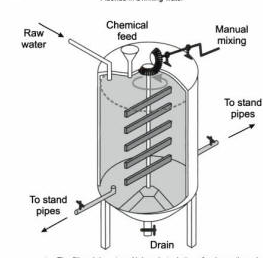
Fig. 2 - The fill and draw type Nalgonda technique for domestic and community Source http://bit.ly/1E1OLh1
2. Adsorption and ion-exchange - In the adsorption method, raw water is passed through a bed containing defluoridating material. The material retains fluoride either by physical, chemical or ion exchange mechanisms. The adsorbent gets saturated after a period of operation and requires regeneration. The different adsorbents used for fluoride removal include activated alumina, carbon, bone charcoal and synthetic ion exchange resins.
3. Membrane filtration process - Reverse osmosis and electrodialysis are two membrane filtration processes which can be used for removal of fluoride. Large scale electrodialysis plants are already used for making drinking water out of brackish water with high fluoride concentrations. Reverse osmosis requires between 2 and 4 gallons of water to produce 1 gallon of RO water. Source water with an abundance of contaminants (including hard water) can reduce the efficiency of an RO system and it can shorten the life of the membrane. Replacement of fouled membranes and lot of energy needed for this process are the major disadvantages.
Adoption of appropriate method - International Groundwater Resources Assessment Centre (IGRAC) has created the following summary for the different options. The methods can be used by domestic well owners and communal water suppliers. Based on available information, a matrix is composed to give an idea about the applicability of the methods for some given situations.
The colours in the matrix correspond with the appropriateness of the method for the given situation: • Green colour means that the method is very suitable • Orange colour means average suitability • Red colour means that the method is unattractive or not applicable for the given situation.
You can read some documents related to defluoridation methods here.
Hi leonarda, We have the same in karnataka, india and made bad experiences with RO plants because they don't survive lobger drought perods. Much better works a system where you load the fluoride on activated alumina which is regenerated when loaded. The flozeide in the regenwration fluid is precipitated wirh lime, so that CaF2 is the result. May work wirh your water as well, what is your ph-value? Greetings Kai
the removal of Fluoride from well water may be accomplished with the use of slaked lime (Calcium Oxide). The Fluoride should precipitate as Calcium Fluoride (CaF2) and settle or be filtered out. Without knowing the concentration of Fluoride in the well water i cannot estimate the stiociomtery for the amount of CaO required and not all of the Fluoride will be removed due to the solubility constant. CaF2 is soluble to 0.17 mg/L at near neutral pH, the lower the pH the more soluble the CaF2.
How about using membrane distillation. As fluoride is non volatile MD will not let the water quality drop due to this. But it depends on the raw water quality also eg. TSS, TDS etc. This technology is relatively new. But rest assured you will have very high quality water with no TDS, no metals ions etc. But if you have volatile like ammonia it will pass. No chemical precipitation required. Also the system does not use pressure, it works at a fraction of the cost of RO or NF. Research have been done and validated the process. You can look it up online for additional details. I just wanted to bring MD into the picture as I didnt see anyone talking about it. Cheers, Paul
I think you are already a little crazy about so many different answers to your question.
I'll tell you about my experience removing fluoride in Spain.
Can use RO, but efficiency decreases if the membranes get fouled.
The most of the Plants use EDR (Electrodialysis), because efficiency increases with fouled membranes and systems are cheaper than RO if waters are of low salinity. (Maximum 3 grs/liter - 1 or 2 grams/liter are ideal)
If you are looking for treatment alternatives in rural regions, please dont hesitate to contact Mr. Lars Osterwalder on linkedin, a former study colleague of mine at the Swiss Federal Institute of Technology.
He's a specialist on your topic, having done field coordination of a research project in Ethiopia 'Optimization and Acceptance of Fluoride Removal Options for Drinking Water in Rural Ethiopia', assessment of the technical performance and costs of fluoride removal options and development of filter material production guidelines together with Nakuru Defluoridation Company (NDC) and Oromo Self-Help Organization (OSHO).
One of his publications which might be of particular interest for you: Science of the Total Environment, 2013, "Multi-criteria assessment of community-based fluoride-removal technologies for rural Ethiopia"
Hi! The approach to environmental remediation and treating natural resources to make it hospitable for human use has relied on analysis and removal of unwanted substances physically.Tulsi leaves have some phyto chemicals which do something for reduction in ppm values. This may not affect the total TDS values or it may. More research is required to understand it at all levels. In India two scientists have developed unique solutions: aa) Dr Uday Bhawalkar of BERI, Pune India.It needs a lot of research to understand him since he has been original in presenting a different approach. His web site is fairly detailed. One article: http://wastetohealth.com/ecological_water_treatment.html DR USB has been the closest to bridging the understand of natural sciences and integrating many ancient practices of India with western approaches and strongly grounded concepts which may require a shake up. bb) Swami Valmiki Sreenivasa Ayyanarya. A traditional and devout worshipper of God Vishnu with gradtuation from Bsc Statistics Honours has studied many well known texts and treatises written in Sanskrit language from BC times of India. He uses ancient Indian techniques broadly called as Rasa Shastras (Chemical sciences). These are popularly known as techniques like alchemy of Europe to turn base metals into gold. However Swami Valmiki uses them to convert toxics into something useful for agriculture.Animal and human tissues can be dissolved including bones in a short period and the liquid substance is a great nutrient for plants! A very god recycling technique for future. Cremation and burial transfers toxics from animal carcass and human bodies to air or soil and water. This would be a better and greener alternative. Both scientists are set to visit North Amercas. Both scientists say the same thing; Plants are the best pollution re-mediators.
Flouride Removal From ground water in Rajasthan, India
Hi Dear Leo,
The State of Rajathan, India also has very high fluoride contents in ground/well water. PHED, WSSO, Rajasthan is using Domestic Deflouridation Units and Hand Pump attached Deflouridation Units for removal of excess fluoride and providing community safe drinking water. These units are based on Activated Alumina (AA) technology which adsorbs the fluoride making water safe for drinking. AA can be rejuvenated in Acid-Alkali solution for reuse. Dilution of fluoride water will also lower its concentration. RO can be another solution but it waste lot of water.
However, there is need of increasing the ground water level through water conservation/ recharging methods for long term and sustainable solution for fluoride free water.
We are currently developing in-house the technology of DFU (Domestic Deflouridation Unit) fitted with Manual force lift Hand Pumps for removal of excess fluoride and providing community safe drinking water in a few villages.
These units are based on a combination of the basic bio-sand filter and use of Activated Alumina (AA) technology which adsorbs the fluoride, to make water safe for drinking purposes. AA regeneration will follow the already known processes. We are yet in the process of optimizing our DFUs by calibrating the exact AA material size (range 0.475 to 2 mm size) and depth etc. of the filter bed, prior to declare establishing a most suited conventional filtering and AA used DFU........it shall take us some more time before we claim having done this.
Activated Alumina is a very cost effective media to remove fluoride form water. More info: http://www.interraglobal.com/portals/0/pdf/msds/msds-basf-dd6-activated-alumina.pdf The largest plant that removes fluoride form well water in the US is 29palms using Activated Alumina form BASF. If you have any questions need more info, send and e-mail to me then I will reply you with more info and introduce you BASF Water Solutions representatives in São Paulo. http://29palmswater.com/water_fluoride.html
Leonardo, we manufacture turnkey systems that can use a variety of treatment processes including, UF, AOP, UV, GAC, NF, RO, Ion Ex, etc. all designed for your specific project and installed in a modular self contained treatment system. Unlike like other treatment systems that are married to a particular treatment method we use the latest technologies to build the best system for your water and because the design is modular it is easily adapted to increase capacity & changing water parameters. The systems are made in the US and are fully guaranteed. If you would like to more please let me know please ask.....info@southwaterllc.com
RO can be very wasteful. For every gallon that is treated, probably 3 or 4 gallons of permeate will go down the drain. You can try activated alumina to remove the fluoride. This would require setting up a treatment system to run the well water through a bed of activated alumina.