We are experiencing the reduction in rainfall since last three years and also the soil moisture is reducung as a effect of less rainfall.
We want to adopt some new technology for improving the water efficiency. We would conduct a sample field project to see how different technology can help us.
Can we also use Hydrogel for improving water use efficiency for rice crop? Would it be a good option?
We use bed sowing method for growing the rice crops. Hydrogel technique is new to us, can you help us with literature, case studies, your experiences please?
I know someone in India who has very superior product named as magic hydrogel having very good water retention capacities and they have already satisfied farmer client base who has used magic hydrogen for many purposes. Some used it for low irrigation requirement. Some used it for excess water absorbance in the field. Some has used it for artificial snow. The product is practically high absorabance and retention. You can also get the customized solution from specific needs from them. Please contact Mr.Jagdish Karnani (Managing Director) and Mr. Ashish Karnani(Director- exports) of acuro organics limited, New Delhi at exportsAcuro Organics
This is very interesting discussion. Do you know any supplier of this hydrogel? I would like to test it in a large irrigation experiment we are running in the desert of Oman, where we use treated oily water to irrigate various plant species. The water is saline, and considering the conditions onsite, this could be an interesting application for this material.
1. Magic hydrogel from acuro organics limited, New Delhi. Contact Mr.Jagdish Karnani( Managing Director) on his mobile at +918882111999. He himself take interest in developing applications and will share his expertise with their magic hydrogel . they have the capabilities to customize the magic hydrogen as per your requirement. They are very professional people.
2. I can suggest better option in combination with hydrogel for optimum treatment and best utilization of your petroleum wastewater for irrigation. I need to know the following inputs from your side for understanding the characteristics of your influent as well as effluent along with the current treatment scheme, characteristics of soil you are having and the desirable water quality for irrigation. You can mail me the details on Sushantkuma@gmail.com.
The Water Network research team has consolidated an answer to the above question. Further input from members is welcome and appreciated.
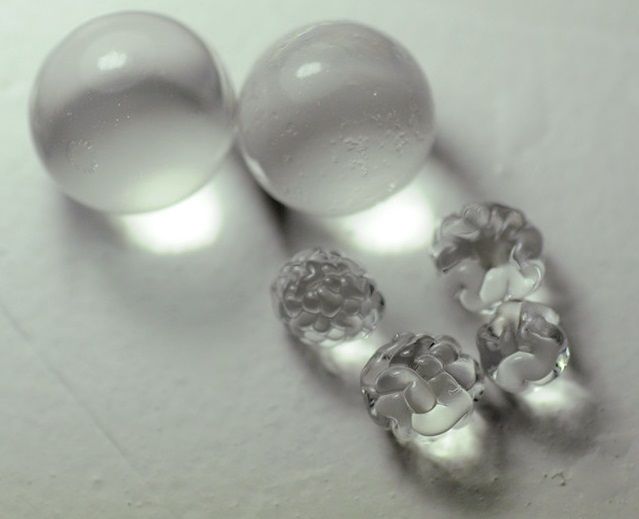
Hydrogels are hydrophilic cross-linked polymer chains.
They are formed through physical, ionic or covalent interactions.
Due to hydrophilicity, hydrogels have the ability to absorb water and swell growing in weight and size.
Depending on the hydrogel type they can absorb and hold up to even 1500 times their weight. Similarly, they can release this water.
The speed of water absorption depends on the type of the hydrogel. Some of the synthetic polymers can take up to 6 hours to swell to complete hydration while natural ones may require only 2 h.
The volume transitions – absorbing and releasing water may depend on the external stimuli which can be physical (temperature, electric or magnetic field, light, pressure, and sound) or chemical (pH, solvent composition, ionic strength, and molecular species).
Hydrogels have various applications: in agriculture, drug delivery, coal dewatering, food additives, tissue engineering…
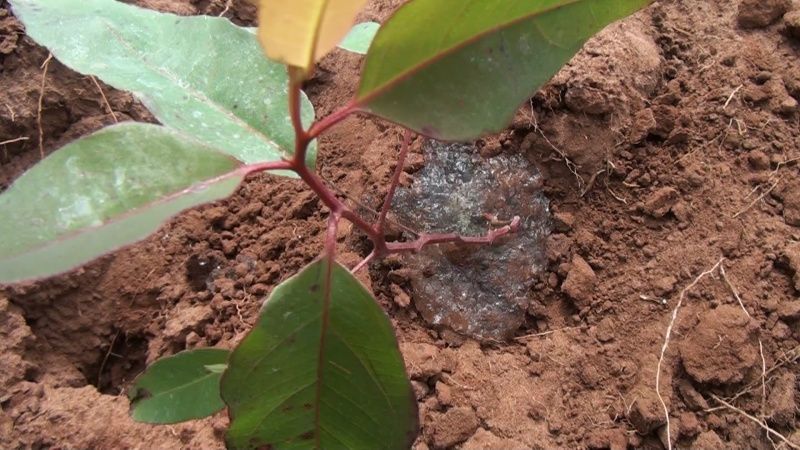
Image 2: Hydrogel use in agriculture Source 2: hydrogel.info/hydrogel-in-agriculture/
Hydrogels are extremely useful in agriculture since they can save water and prevent land erosion .
They prevent the soil from being washed away and hydrate it, helping it retain moisture and increase the water-holding capacity. This makes plants survive for longer periods in drought or require less frequent irrigation.
Frequent and intense irrigation can damage the soil making it erode, form crust or harden. The hydrogel gives soil stability, increases permeability and enables better plant growth.
Adding hydrogels to the surface of the soil increases the soil water-holding capacity and the rainfall percolates the soil quite easily.
Not only this, but they reduce the need of fertilization, since the nutrient loss is prevented by reducing runoff.
Alternatively, some hydrogels are made as fertilizers and even have controlled water release so that the dose of the fertilizer is adjustable in time. The nutrient is available for the plant over a longer period of time rather than a rapid availability that ammonium nitrate, ammonium phosphate or potassium chloride provide.
The controlled or slow release of fertilizers from hydrogels do not have official differences. They are achieved by coating or encapsulating the conventional soluble fertilizers. The coatings can be water insoluble, semi permeable or impermeable with pores.
The same principles apply to pesticides and herbicides .
The use of hydrogels is extremely beneficial in cases where post plantation irrigation is limited.
Water release is controlled so that the fertilizer is released according to plants’ needs.
Hydrogels can be made of:
synthetic polymers
natural polymers
combination of natural and synthetic polymers.
The synthetic polymers are mechanically stronger and durable and can absorb more water. They can, therefore be more efficient in agriculture as they hold more water and lost longer.
On the other hand, hydrogels made from natural polymers are biodegradable and often do not leave any bi-products so they are more environmentally friendly.
Drying out before the next hydration makes the hydrogels less efficient so good irrigation is a necessity for the maximum effect.
It is noticed that in saline soil the hydrogels have lower efficiency.
Hydrogels can be applied by being mixed with the soil or by spraying.
Declining water is a great concern in production of rice, because rice is more sensitive to water deficiency which restricts normal rice growth resulting in enormous economic loss. A field experiment was conducted to study the effect of hydro gel in different sowing techniques of aerobic rice viz. flat, ridge, and bed sowing. Observations on soil moisture percentage before every irrigation, yield, and yield components of rice were recorded. Application of hydro gel improved soil moisture contents in all the three sowing techniques as compared to soil without hydro gel. More soil moisture contents met the crop water needs and increased the number of germinated seeds. As a consequence of more emergence and better stand establishment, the yield components were also improved increasing the yield of rice in hydro gel amended soil in all sowing techniques. However, sowing of rice on beds with hydro gel amendment was found the most effective; it not only improved the performance of aerobic rice but also enhanced growth and yield of aerobic rice more than other sowing techniques.
Hydro-gel has capacity to absorb a minimum of 350 times its weight of pure water at 50 degree Celsius, its use will help farmer in getting high productivity by using much less quantity of water. Agriculture scientists claim that its use will also improve physical properties of soil such as porosity, aggregate stability and hydraulic conductivity.
"The scientists had successfully demonstrated the potential of resolving the problem of poor water use efficiency in agricultural crops. Besides improved nutrient use efficiency, an array of other benefits has also been achieved by using Hydro gel",
Greater water-use efficiency depends on better agricultural practices alongside extra technology.Hydrogel technology will not be a economical option for rice farmers, for a small project it would be good option though. But there are several studies done focusing on rice farming. You should read papers like this http://www.iwmi.cgiar.org/Publications/SWIM_Papers/PDFs/SWIM05.PDF
Yes Hydrogen is good option for the purpose. try finding a paper on "Enhancing the available water content in unsaturated soil zone using hydrogel", to improve plant growth indices, you can read this paper.
we have an automation technique for irrigation of crops in semi arid and arid regions.
our technique shall help you save up to 40% of water used for irrigation. we can also assist you in installing a water treatment plant in your locality if sufficient grey water, about 5 million litres per day, is produced from nearby townships
please send your reply to "founder@cfatglobal.com"
This solution is designed for a long time by various companies. I remember talking about this with a manager of BASF. They are testing a product that you put in the soil and absorbs water. One gram is capable of holding 400 grams of water. It is the same system for the nappy of children. The problem is its durability and other salts which brings to the ground. I think we can use in desert areas and where there is little rain. I use subsurface drip irrigation for 17 years and I think in some areas and on some crops this product is ideal.