I have been using using an extract of local plants for water disinfection due to antimicrobial properties. The focus of the research is the produce the extract that can replace conventional chlorine disinfectant. I will like to ask for what method or techniques that can be used to compare the composition of the extracts and chlorine?
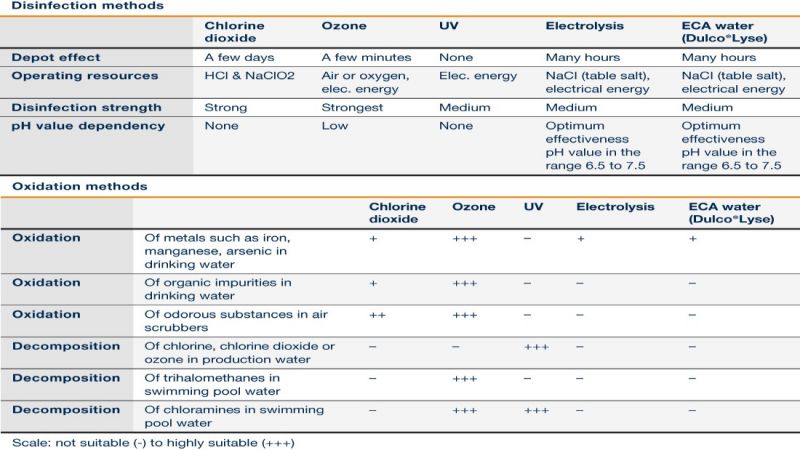
In the search for traditional chlorine replacements it is important to look at the end use of the water. With all disinfection methods there are certain benefits and disadvantages.
some key criteria can be found in the table below.
Depending on the water make up, end use and time between water treatment and end use as suitable replacement for traditional chlorine can be found.
Should you need additional information please feel free to contact me.
this is a very good research work, first look at the properties of chlorine, and why it is the most widely and common disinfectant, then look at your extract compare its properties with chlorine and see where it will gain more advantage, also look at the mechanism of anti- bacteria, bactericidal, bacteriostatic, etc .
When evaluating disinfection in water systems it's very important to measure reduction in biofilm, opposed to just reduction in planktonic counts. To measure biofilm reduction I suggest a BioGEORGE or DATS for a large system. A CDC Biofilm Reactor is great for small scale testing.
In a water system I would suggest coupling biofilm monitoring with ATP testing (quick/easy) of the bulk water. This will give great indication of disinfection.
you should test for cultures supported both before and after treatment. Just realize that an antimicrobial may bring toxicity to the water supply that has health issues of its own. You need to test for that both in acute and chronic toxicity as well as carcinogicity.
In one of the series of our experiments, we tested for the toxicity levels of the extract using the skins of rats. no visible rash, blisters etc. we are now injecting the extract now to look at the effects on the internal organs of these rats
Hello,First of all conventional chlorine disinfection is Bleaching powder.We can use liquid chlorination with Hypo(Naocl) or Solid calicium hypo chloride.
Alternatives are UV disinfection and Ozone method.Ozone is perfect to remove virus and bacterias.UV is also good for bacterias except HE.
Also the study of microbes can be done with test tube or petriplates.
Document the log removals vs. dosage to compare effectiveness of disinfectants. Hard numbers are needed. If the material is effective, move on to addressing all the questions concerning its own health and environmental effects and also research should to establish the precise mechanisms by which bacteria are disrupted.
The study of antimicrobial activity can be done by two ways -one using test tubes and other using petriplates. Either ways work well just show that there is less growth with the anti microbial substance which in case of tubes will be turbidity.Keep controls well planned and documented.
.jpg)